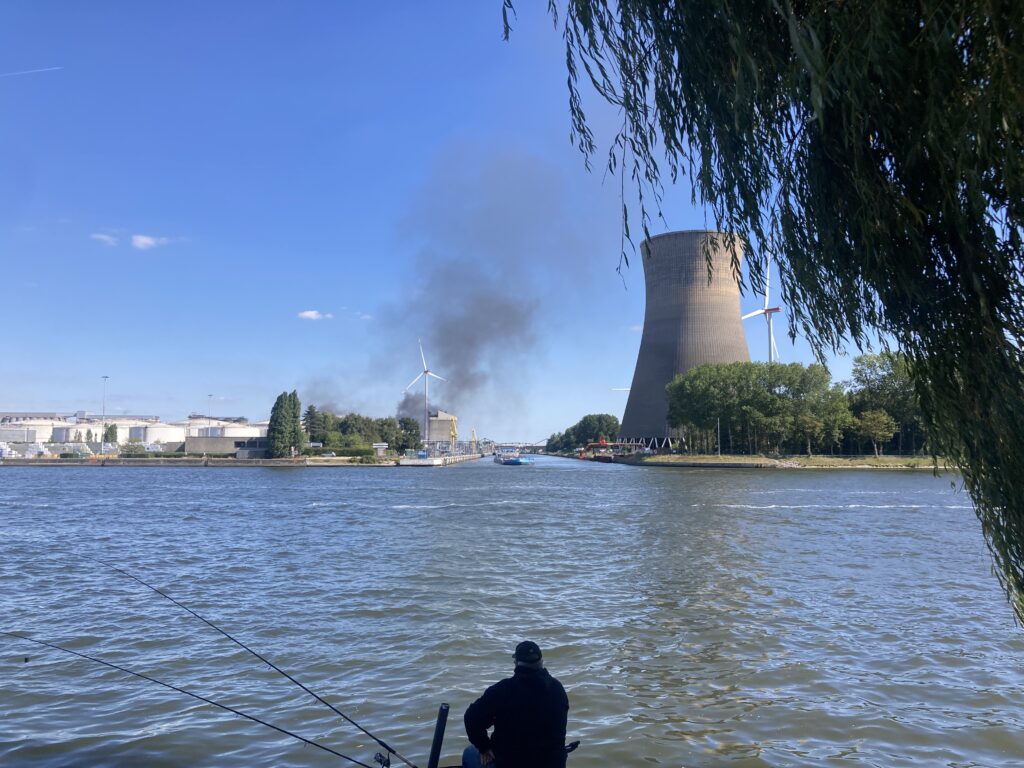

Based on conversations with anglers along the Ghent–Terneuzen Canal, David Dumont speculates on an artistic imagination at the intersection of industry, ecology, and the local food system.
For some time, the Flemish government has advised against eating self-caught fish from public waters. An advice emphatically reinforced by North Sea Port, the economic powerhouse of the harbor area. Historical pollution is indisputable, and the present contamination is now irreversible as well.
Paradoxically, the highest fishing license from that same Flemish government—the so-called grand permit—does allow for a select catch to be taken home. Despite all warnings, laws, and restrictions, a discreet culinary folklore has thus also developed along the canal. As an offshoot of the city where Waterzooi once emerged (the “poor man’s dish” pieced together from whatever fish was available, and reinvented time and again because of pollution), this comes as no surprise.
This is a story of self-reliance, folk wisdom, and calculated risks. Among some fishers, the idea persists that in 2025 the water has never been so pure.
But it is also telling how a deeply human form of “hunting & foraging in one’s own habitat” claims its place within the violent scenography of the canal area. At first glance, it may seem like a trivial, insignificant activity, yet it sparks the imagination about new forces of growth.
Could this artificial waterway, in the future, become a link in the local food chain? Could the scaling up of a hobby practice bring about an ecological catharsis? Does the prospect of economic profitability signal a breakthrough for water quality, biodiversity, and public health? What could be a representative and appetizing export product for the dynamic canal region?
The plans for a questionable yet ambitious start-up in the food industry are already on the table.